Here are some important points:
Key Takeaways
- Food labels are tools, not tests—you don’t need to read every line to make better choices.
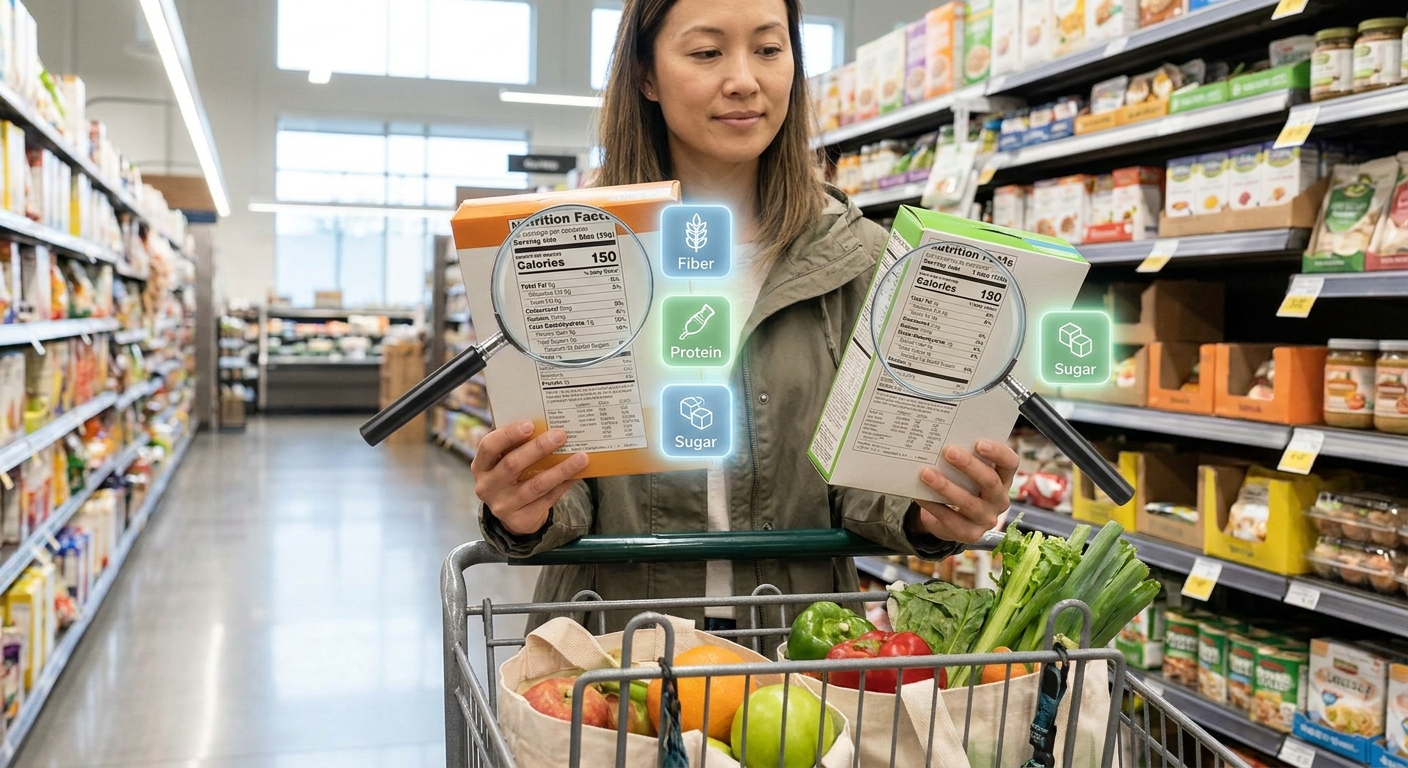
- Focus on a few key items: serving size, ingredients list, added sugars, sodium, and fiber.
- Marketing terms like “natural,” “light,” or “immune support” are not the same as medical advice.
- Store brands and simple ingredients often offer good nutrition at a lower cost.
- Always confirm label-based decisions with your healthcare team if you have conditions like diabetes, heart disease, or kidney disease.
Why Learning to Read Labels Matters
Food packaging can feel confusing—tiny print, health claims, and long ingredient lists. Yet understanding a few basics can help you:
- Compare products quickly
- Avoid surprises like extra sugar or sodium
- Choose foods that better match your health goals and budget
This guide is designed for adults and caregivers who want clear, practical steps without confusing jargon.
Step 1: Start With the Serving Size
At the top of the Nutrition Facts label, you’ll see:
- Serving size (for example, 1 cup, 2 cookies, ½ can)
- Servings per container
Most other numbers on the label (calories, grams, milligrams) refer to one serving, not the whole package.
Why it matters:
- If a small bag of chips has 2 servings, and you eat the whole bag, you’re getting double the listed calories, sodium, and fat.
- For caregivers, this helps with portioning meals for those who need structured amounts, such as people with diabetes or heart conditions.
You don’t need to measure every bite, but a general sense of what counts as a serving can help you estimate.
Step 2: Look at the Ingredient List
Ingredients are listed from most to least by weight.
Helpful patterns:
- Shorter lists with familiar items often mean fewer additives. Example: “oats, raisins, almonds” versus a long list of sweeteners and flavorings.
- Words like “whole wheat”, “whole oats”, or “brown rice” near the top suggest more whole grains.
- Multiple sugars (such as cane sugar, honey, corn syrup, maltose) appearing throughout the list often indicate a sweeter product.
If there are ingredients you or a family member must avoid—such as gluten, nuts, or dairy—this section is critical. When in doubt, check with a healthcare professional about which ingredients are a concern for your specific condition.
Step 3: Focus on a Few Key Nutrients
You do not need to track everything on the label. Most adults and caregivers benefit from glancing at these areas first.
Added Sugars
“Total Sugars” includes natural sugars (like those in fruit or milk) plus any added sugar. The “Added Sugars” line tells you how much is added during processing.
- Foods higher in added sugars include sweetened drinks, many breakfast cereals, desserts, flavored yogurts, and some sauces.
- Regular high intake of added sugars can be linked with weight gain and blood sugar issues.
Look for items with lower added sugar when possible, especially for everyday foods like cereal and yogurt.
Sodium (Salt)
Sodium is listed in milligrams (mg).
- Many processed foods (soups, frozen meals, sauces, snacks) contain more sodium than we expect.
- People with high blood pressure, heart failure, or kidney disease are often advised to limit sodium.
As a general rule of thumb:
- Around 140 mg sodium or less per serving is commonly considered relatively low.
- Over 400–500 mg per serving can add up quickly across a day.
Ask your healthcare team what sodium targets make sense for you or your loved one.
Fiber
Fiber supports digestion, heart health, and blood sugar control.
- For grain products, aim for more fiber (for example, 3 grams or more per serving where possible).
- Whole-grain breads, cereals, and pastas usually have more fiber than white versions.
Step 4: Understand Common Label Claims
Package claims are often marketing tools. They follow certain rules but can still be confusing.
- “Low fat”: The product may have less fat, but could be higher in sugar or salt.
- “Light” or “lite”: Might refer to color, taste, or reduced fat/calories, not always clear without the label.
- “Natural”: Does not guarantee a product is healthy or minimally processed.
- “Made with whole grains”: Could mean only a small amount of whole grain unless it says “100% whole grain/whole wheat.”
- “No added sugar”: No sugar added in processing, but the food may still be high in natural sugars (like juice) and affect blood sugar.
Use these claims as prompts to read the actual Nutrition Facts and ingredient list instead of relying on the front of the package alone.
Budget and Insurance Considerations
Understanding labels can help manage food costs:
- Store brands: Often have very similar nutrition profiles to name brands at a lower cost.
- Basic staples with simple labels (rice, beans, oats, frozen vegetables) are usually cost‑effective.
- Unit prices (price per ounce or per pound) can help compare cost across package sizes.
While health insurance and Medicare generally do not cover groceries, they may cover:
- Visits with a registered dietitian for certain conditions (like diabetes or kidney disease)
- Some nutrition education programs or group classes
Check your plan details or call member services to ask:
- Whether nutrition counseling is covered
- If you need a referral from your primary care provider
Label Reading Tips for Caregivers
Caregivers often shop for people with specific needs. Use labels to:
- Compare sodium for canned soups, broths, or frozen meals for someone with heart or kidney conditions.
- Compare added sugars among yogurts, cereals, or drinks for someone who needs steady blood sugar.
- Check allergen statements (such as “contains milk, soy, wheat, nuts”) to avoid reactions.
If the person you care for has a medical condition or takes multiple medications, ask their healthcare team for target ranges (for example, sodium limits) to guide label reading.
When to See a Doctor or Dietitian
Consider reaching out to a healthcare professional if:
- You feel overwhelmed trying to match labels with health instructions you’ve been given.
- You or a loved one has a new diagnosis (diabetes, kidney disease, heart failure, celiac disease) and you’re unsure how to shop.
- There’s unexplained weight change, blood sugar swings, swelling, or blood pressure changes despite trying to follow label guidance.
A registered dietitian nutritionist (RDN) can:
- Walk through sample labels and help you prioritize what to look for
- Suggest affordable products that fit medical needs
- Help you create a simple shopping list based on your usual store
Always use label guidance as a general tool, not a substitute for individualized medical care.
Making Label Reading Simple
To keep things manageable:
- Check serving size.
- Glance at ingredients for whole foods and any allergens.
- Compare a few key numbers—added sugars, sodium, and fiber.
- Ignore distracting front‑of‑package promises.
Over time, you’ll likely recognize go‑to products that work well for your health, taste, and budget, making shopping faster and less stressful. For specific nutrition questions about your health or medications, consult your doctor or a registered dietitian.